
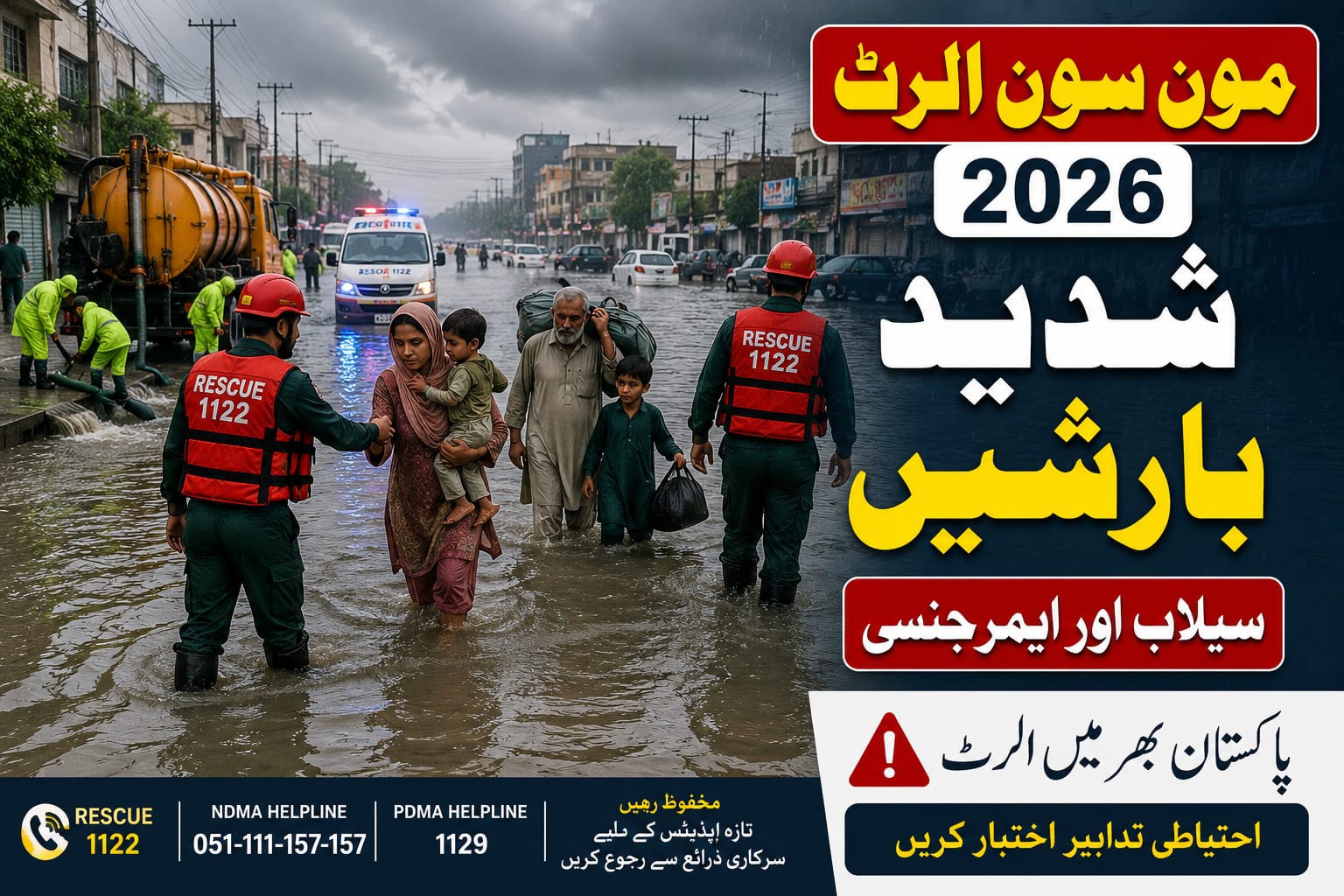
Monsoon Update 2026: Flood Conditions Reported in Various Cities Nationwide
The ongoing 2026 monsoon season has intensified across Pakistan, bringing heavy torrential rains, localized cloudbursts, and urban and flash flooding to multiple districts nationwide. Continuous downpours have inundated low-lying residential areas, disrupted traffic, damaged power infrastructure, and triggered landsliding across key mountain corridors.
Both the National Disaster Management Authority (NDMA) and the Pakistan Meteorological Department (PMD) have issued fresh impact-based advisories warning that active monsoon currents originating from the Arabian Sea: Flood Conditions Reported in Various Cities Nationwide, coupled with upper-level westerly systems, will continue generating moderate to heavy rainfall in the coming days.
Also Read:
Punjab Skill Development & Training Program 2026: Complete Registration & Eligibility Guide
National Overview: Rainfall Impact Across Provinces
| Region / Province | Primary Weather Hazards | Highly Affected Districts & Cities | Current Official Status |
| Punjab | Urban flooding, overflowing drains, river surges | Lahore, Gujranwala, Sialkot, Rawalpindi, Faisalabad, Multan, Narowal | PDMA active alerts issued; WASA dewatering active |
| Sindh | Urban submerged zones, coastal weather surges | Karachi, Hyderabad, Sukkur, Larkana | Local municipal teams on high alert |
| Khyber Pakhtunkhwa (KP) | Flash floods, hill torrents, landslides, road blockages | Peshawar, Swat, Mardan, Shangla, Lower Dir, Chitral | Rescue 1122 & PDMA relief operations ongoing |
| Gilgit-Baltistan (GB) | Glacial Lake Outburst Floods (GLOF), river erosion | Astore, Diamer, Ghizer, Hunza, Bagrot Valley | GBDMA monitoring vulnerable mountain streams |
| Azad Jammu & Kashmir (AJK) | Cloudbursts, landsliding, flash flooding | Neelum Valley, Athmuqam, Muzaffarabad | SDMA clearing roads & deploying emergency aid |
| Balochistan | Hill torrents, seasonal nullah overflows | Quetta, Khuzdar, Barkhan, Musakhail, Zhob | PDMA monitoring seasonal waterways |
Key Regional Highlights & City Conditions
1. Urban Inundation Across Punjab & Metropolitan Centers
Heavy monsoon downpours have impacted central and northern Punjab, setting single-day rainfall records in key cities.
-
Gujranwala & Sialkot: Gujranwala recorded over 245 mm of rainfall in a single spell, submerging commercial markets and low-lying residential zones. Sialkot registered 139 mm, causing severe water accumulation on main thoroughfares.
-
Lahore, Rawalpindi & Islamabad: Lahore recorded over 123 mm of rainfall, leading to temporary waterlogging in underpasses and urban neighborhoods. Meanwhile, twin cities Rawalpindi and Islamabad recorded significant rainfall, putting emergency teams on high alert near Nullah Lai.
-
River Swells: Surging water releases from upstream catchments have increased water levels in the River Chenab at Marala, Khanki, and Qadirabad barrages, alongside elevated flows in the Indus, Jhelum, and Ravi rivers.
2. Cloudbursts & Flash Floods in KP & AJK
Mountainous topography combined with intense local convective clouds has triggered sudden flash floods.
-
Neelum Valley (AJK): A cloudburst near Athmuqam triggered massive mountain streams that damaged local structures, shops, and secondary access roads. State Disaster Management Authority (SDMA) teams launched search and rescue missions to move vulnerable families to safety.
-
Khyber Pakhtunkhwa: Flash floods in Swat, Mardan, and Dir caused localized stream overflows, disrupting road connections and temporarily cutting off remote villages.
3. Glacial Outbursts & Landslides in Gilgit-Baltistan
In Gilgit-Baltistan, high seasonal temperatures combined with monsoon moisture accelerated glacier melting, triggering localized GLOF events.
-
Astore & Hunza: Cloudburst-induced flooding in Astore Valley inundated farmland and residential property. Rising flows in the Hunza-Nagar River placed suspension bridges and nearby roads at risk, prompting local authorities to issue timely evacuation warnings.
Infrastructure Challenges & Public Health Risks
Continuous rainfall has created several operational challenges across urban centers:
-
Power & Utility Outages: Fallen trees, transformer faults, and water entering electrical distribution panels have triggered temporary power cuts in major cities.
-
Traffic Disruption: Submerged roads, closed underpasses, and reduced visibility have caused severe traffic delays along primary arterial routes.
-
Public Health Precautions: Accumulated floodwater increases the risk of waterborne and vector-borne diseases like dengue, cholera, and gastroenteritis. Health departments advise citizens to boil drinking water, use mosquito repellents, and maintain strict personal hygiene.
Safety Guidelines During Heavy Rain & Flooding
To minimize risks during severe weather events, emergency authorities recommend taking these safety precautions:
[Avoid Standing Water] ➔ [Stay Clear of Power Lines] ➔ [Secure Valuables] ➔ [Avoid Unnecessary Travel]
-
Never Drive Through Standing Water: Avoid driving light vehicles or motorbikes through flooded underpasses or submerged streets. Just 12 inches of moving water can sweep away light passenger cars.
-
Beware of Electrical Infrastructure: Stay clear of electric poles, transformers, fallen power lines, and metal signboards to prevent electrocution hazards.
-
Protect Low-Lying Homes: If water begins entering your home, switch off the main electrical breaker immediately. Move valuable electronics and food supplies to elevated shelves.
-
Avoid Mountain Corridors: Travelers and tourists visiting northern areas (Murree, Swat, Kaghan, AJK, GB) should avoid non-essential road travel during active rainfall spells due to high landslide risks.
Emergency Helplines & Rescue Contacts
If you require emergency rescue, medical aid, or flood assistance, reach out to these official helplines:
-
Rescue 1122 (Punjab, KP, GB, AJK): Dial
1122 -
NDMA National Emergency Helpline:
051-111-157-157or1057 -
PDMA Punjab Helpline:
1129 -
PDMA Khyber Pakhtunkhwa Helpline:
1700 -
PDMA Sindh Helpline:
021-99222967 -
PDMA Balochistan Helpline:
081-9241133
Frequently Asked Questions (FAQs)
1. Which major cities are currently affected by urban flooding?
Urban waterlogging and flood conditions have been reported in Lahore, Rawalpindi, Islamabad, Gujranwala, Sialkot, Faisalabad, Karachi, Peshawar, and Swat.
2. Which major rivers are under close flood observation?
Authorities are closely monitoring water discharge levels in the River Indus, River Chenab, River Jhelum, River Ravi, and River Kabul, along with key seasonal hill torrents.
3. What is a cloudburst, and where did it occur?
A cloudburst is an intense, highly localized downpour occurring over a short duration. Cloudburst events were recently reported in Neelum Valley (AJK) and Astore Valley (GB).
4. Are travel routes to northern tourist areas open?
Some mountain corridors in Astore, Gilgit-Baltistan, and Azad Kashmir have experienced temporary landsliding blockages. Travelers should check NDMA road alerts before planning a trip.
5. How are municipal agencies clearing flooded streets?
WASA teams and district administrations have deployed heavy mobile dewatering pumps, cleared major drainage lines, and stationed emergency staff at high-risk intersections.
6. What precautions should I take if water enters my home?
Turn off your main circuit breaker immediately to prevent electric shocks, relocate food and valuables to higher floors, and call Rescue 1122 if emergency evacuation is needed.
7. What is a Glacial Lake Outburst Flood (GLOF)?
A GLOF occurs when a dam containing a glacial lake bursts, releasing high volumes of water, rocks, and mud down mountain valleys. It poses a seasonal threat to parts of Gilgit-Baltistan and upper KP.
8. How long will the current monsoon spell continue?
According to PMD forecasts, active monsoon currents will continue bringing intermittent moderate-to-heavy rainfall across upper, central, and coastal parts of Pakistan over the coming weeks.
9. How do power outages occur during heavy rains?
Power utilities disconnect supply to waterlogged feeders to prevent electrical fires, grid damage, and electrocution hazards from submerged infrastructure.
10. Where can I find official, verified daily weather updates?
Real-time weather bulletins and advisories are published directly on the official portals of the Pakistan Meteorological Department (PMD) and NDMA.
Conclusion & Official Disclaimer
As the 2026 monsoon season continues across Pakistan, staying informed through official disaster management channels and practicing safety precautions remains crucial. Avoid unverified social media rumors, delay unnecessary travel along flooded roads or landslide-prone mountain routes, and keep emergency contact numbers accessible.
Disclaimer: This article is published strictly for public awareness and educational purposes. Weather situations, river discharge rates, and road access statuses change rapidly during active monsoon spells. Always verify real-time alerts through official government channels before making travel or emergency plans.
Official Government Portals & Weather Resources
-
Pakistan Meteorological Department (PMD): pmd.gov.pk
-
National Disaster Management Authority (NDMA): ndma.gov.pk
-
PDMA Punjab: pdma.gop.pk
-
PDMA Khyber Pakhtunkhwa: pdma.gov.pk
Published By: Pak Schemes Team
Date : 22 July 2026
Topic : Monsoon Update 2026: Flood Conditions & Heavy Rainfall Reported Nationwide