
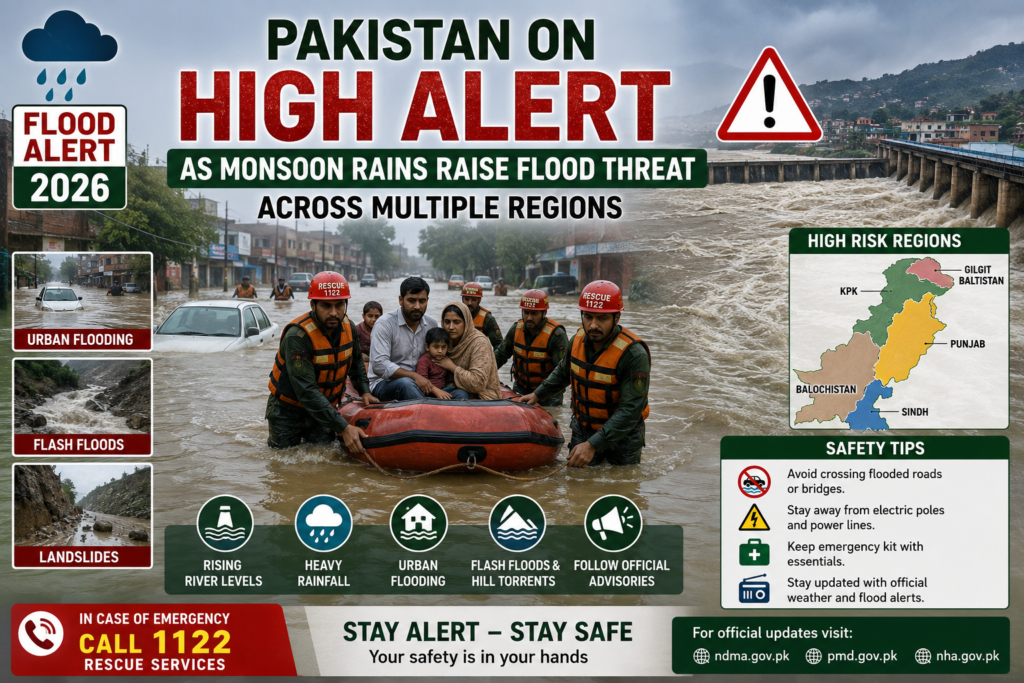
Pakistan on High Alert as Monsoon Rains Raise Flood Threat Across Multiple Regions
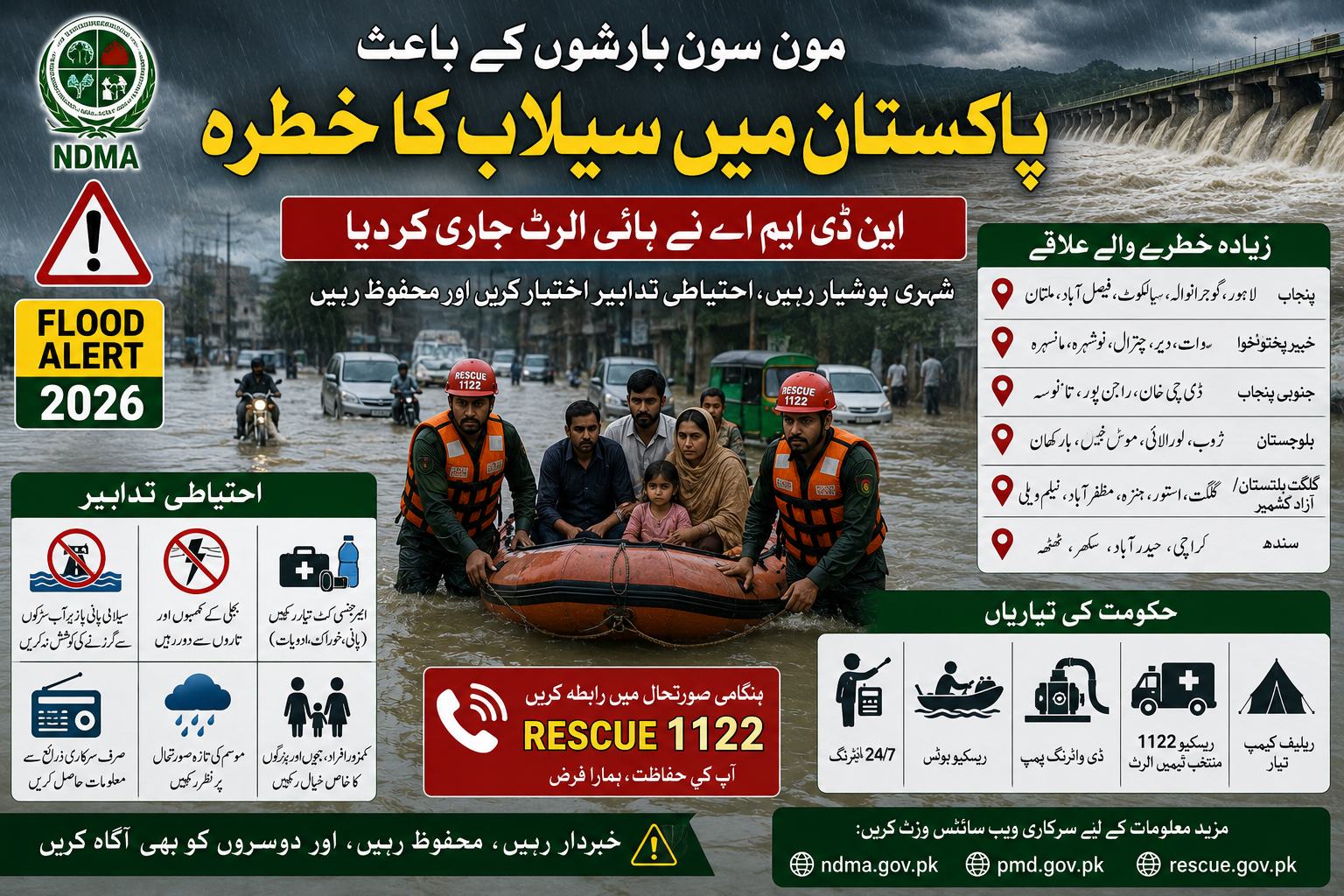
Disaster management authorities across Pakistan have issued nationwide high-alert advisories as heavy, continuous monsoon downpours elevate water levels in major river basins, seasonal streams, and urban drainage networks. The Pakistan Flood Alert 2026 highlights severe vulnerabilities ranging from riverine overflows in the plains to flash floods, hill torrent surges, and urban waterlogging across multiple provinces.
The National Disaster Management Authority (NDMA), the Pakistan Meteorological Department (PMD), and Provincial Disaster Management Authorities (PDMAs) have placed emergency response units on maximum readiness as weather systems continue to deliver concentrated precipitation.
Also Read:
Punjab Government Rs 40 Billion Public Schools AI IT Labs Initiative to Transform Digital Learning
Escalating Water Levels Across Major River Systems
Intense rainfall over upper catchment areas, combined with seasonal high-altitude glacial melt, has significantly raised discharge volumes across primary river channels:
-
Chenab River: Medium to high-level flood flows have been monitored at key control points, including Khanki, Qadirabad, and Chiniot Bridge, with water levels downstream at the Trimmu Barrage rising rapidly.
-
Indus & Kabul Rivers: Low-level flood conditions persist across the Indus River at Kalabagh, Chashma, and Taunsa Barrages. The Kabul River near Nowshera continues to register elevated seasonal inflows.
-
Ravi & Jhelum Rivers: Low flood flows remain under active surveillance along the Ravi River (near Balloki and Sidhnai) and Jhelum River basins.
-
Seasonal Nullahs: Localized nullahs—such as Nullah Aik and Nullah Palkhu near Wazirabad—are experiencing sharp surges, threatening adjoining low-lying communities.
High-Risk Zones for Urban Flooding & Flash Torrents
The current monsoon spell presents a dual challenge: severe infrastructure strain in major metropolitan hubs and destructive flash flooding in hilly terrain.
1. Urban Inundation in Major Cities
Excessive rainfall routinely overwhelms municipal drainage networks. Cities under heightened surveillance for localized flooding and waterlogging include:
-
Lahore, Sialkot, Gujranwala, Hafizabad, and Sheikhupura
-
Faisalabad, Sargodha, Jhang, and Multan
-
Low-lying sectors of Rawalpindi, Islamabad, and Peshawar
2. Hill Torrents and Mountainous Flash Floods
The NDMA’s National Emergencies Operation Centre (NEOC) has cautioned against rapid water accumulation in natural channels:
-
South Punjab & Northern Balochistan: Southwestern hill torrents in Dera Ghazi Khan, Rajanpur, Zhob, and Loralai are highly susceptible to sudden surges from heavy rain in the Sulaiman Range.
-
KP, AJK & Gilgit-Baltistan: Mountainous streams face flash overflow risks, while steep valleys remain vulnerable to landslides and Glacial Lake Outburst Floods (GLOFs).
Regional Vulnerability Summary
| Geographic Zone | Primary Hazard Type | High-Risk Sectors & Waterways |
| Northern KP & Gilgit-Baltistan | Flash Floods, Landslides & GLOF | Swat River, Hazara, Dir, Chitral, Karakoram Highway |
| Central & Northern Punjab | Riverine & Urban Flooding | Chenab River, Nullah Aik, Nullah Palkhu, Lahore, Sialkot, Gujranwala |
| South Punjab & Balochistan | Violent Hill Torrents | D.G. Khan, Rajanpur, Taunsa Barrage, Zhob, Loralai |
| Sindh & Coastal Areas | Urban Drainage Overflows | Low-lying sectors of Karachi, Hyderabad, and coastal nullahs |
Government Emergency Operations & Preparedness
Federal, provincial, and local authorities have mobilized key disaster response frameworks:
-
24/7 Satellite & Gauge Monitoring: Emergency control centers are tracking satellite meteorological forecasts and river gauge discharge levels continuously.
-
Deployment of Relief Machinery: Dewatering pumps, heavy excavation equipment, rescue motorboats, and Rescue 1122 personnel are pre-positioned near vulnerable waterways and urban choke points.
-
Evacuation & Relief Shelters: Temporary emergency camps have been mapped out to house displaced families should riverbanks or embankments breach danger levels.
Essential Safety Guidelines for Residents
Citizens residing in flood-prone zones or traveling across active rain belts are urged to observe strict precautions:
-
Avoid Crossing Waterways: Never attempt to drive, walk, or wade through flowing floodwaters or submerged roads.
-
Stay Safe Around Electricity: Avoid standing near damp utility poles, exposed transformers, or flooded power lines to prevent electrocution.
-
Keep Emergency Supplies Ready: Maintain a compact emergency kit containing clean drinking water, non-perishable food, flashlights, power banks, essential medicines, and identity documents.
-
Verify Official Updates: Rely strictly on validated advisories from the NDMA, PMD, and local district administrations rather than unverified social media claims.
Frequently Asked Questions (FAQs)
1. Why is a high flood alert active across Pakistan in 2026?
Widespread, intense monsoon downpours have filled major river basins, saturated urban drainage systems, and elevated the risk of flash flooding and riverine spills.
2. Which major rivers are currently experiencing flood flows?
Medium-level flooding has been recorded along the Chenab River, while low-level flood conditions are monitored along the Indus, Jhelum, Ravi, and Kabul rivers.
3. What areas are at the highest risk for hill torrent flash floods?
The hill torrent corridors of South Punjab (D.G. Khan, Rajanpur) and the mountain streams of northern Balochistan face rapid flash flood risks following heavy rains in adjacent mountain ranges.
4. What is urban flooding, and why does it occur in major cities?
Urban flooding occurs when heavy precipitation exceeds the discharge capacity of city drainage networks, leading to rapid water accumulation on roadways and residential areas.
5. Are northern tourist destinations like Gilgit-Baltistan, Swat, and Murree safe right now?
Authorities advise exercising caution or postponing non-essential trips to northern mountainous routes due to elevated risks of landslides, sudden road blockages, and GLOF events.
6. Where can travelers verify weather and road conditions before embarking?
Travelers should review real-time alerts published on the official websites and social channels of the NDMA, PMD, and National Highway Authority (NHA).
7. What should residents in low-lying urban areas do during heavy rain?
Unplug sensitive electronic devices, elevate household valuables above ground level, avoid driving through waterlogged streets, and follow local municipal instructions.
8. How are municipal bodies handling urban water accumulation?
Municipal corporations and WASA teams are deploying heavy-duty dewatering machinery and clearing primary drainage choke points across major cities.
9. How is climate change influencing Pakistan’s monsoon patterns?
Rising global surface temperatures exacerbate weather volatility, causing short-duration cloudbursts, accelerated glacial melting, and intensified localized downpours.
10. How can citizens reach emergency help during a flood event?
Emergency rescue services can be reached directly by dialing 1122 (Rescue Services) or contacting local district emergency control helplines.
Conclusion & Disclaimer
Conclusion
With active weather systems generating substantial rainfall across the country, proactive preparation, clear public messaging, and strict adherence to official advisories remain critical to protecting human lives and property. Emergency response agencies continue around-the-clock operations to manage vulnerabilities and deliver prompt relief across all affected districts.
Disclaimer
This article is prepared for public awareness and educational purposes based on government advisories and disaster management updates. Weather conditions and river discharge levels fluctuate rapidly; readers must verify real-time updates directly on official government emergency portals.
Official Portal Links:
For real-time flood monitoring, weather advisories, and emergency alerts, visit:
Published By: Pak Schemes Team
Date : 26 July 2026
Topic :Pakistan on High Alert as Monsoon Rains Raise Flood Threat Across Multiple Regions