
Petrol Price Increase in Pakistan 2026 – Full Details
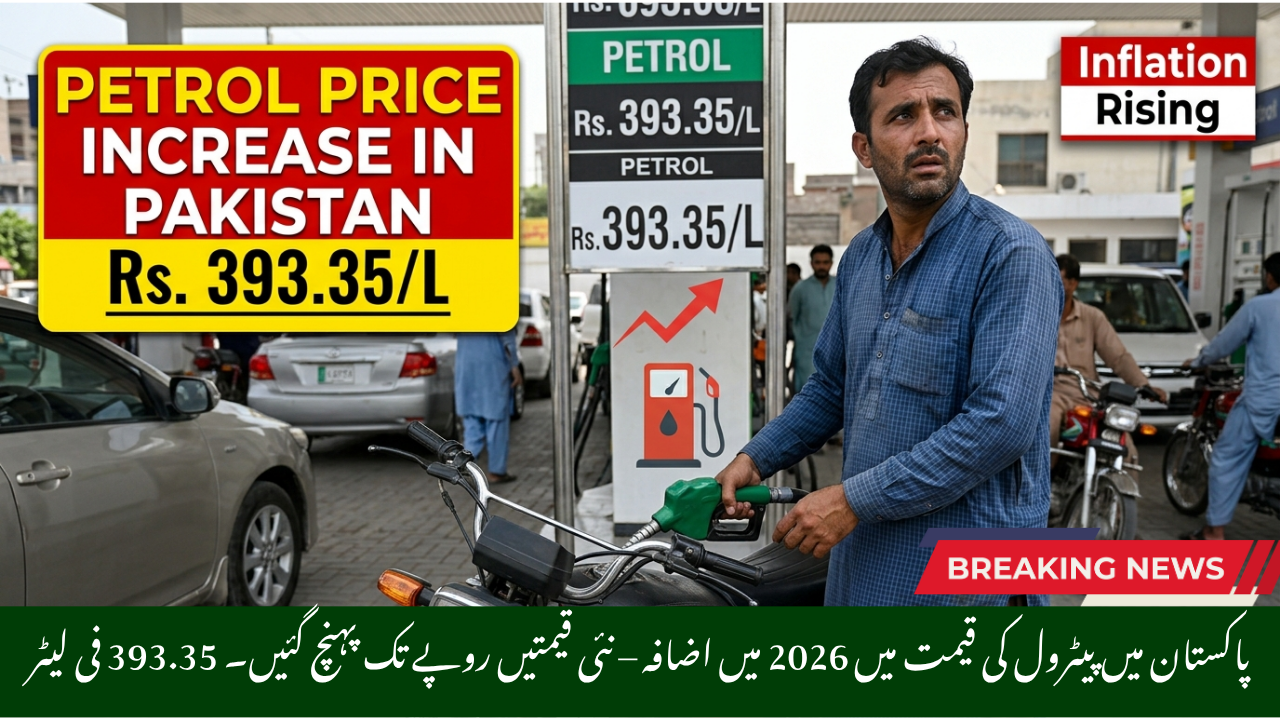
Petrol price increase in Pakistan has once again shocked citizens as the government announced a significant hike in fuel prices. The new petrol price has reached Rs. 393.35 per litre, following an increase of Rs. 26.77 per litre, making it one of the highest fuel rates in the country’s history.
This sudden surge has created concern among the public, as fuel prices directly impact transportation, food costs, and overall inflation. The latest petrol price increase in Pakistan is expected to put additional financial pressure on households already dealing with rising living expenses.
New Petrol and Diesel Prices
According to the latest notification by the Government of Pakistan:
- Petrol price: Rs. 393.35 per litre
- Increase: Rs. 26.77 per litre
- High-speed diesel: Around Rs. 380 per litre
These new rates are effective immediately and will remain in place until the next review.
Reasons Behind the Price Increase
The main reasons behind the petrol price increase in Pakistan are linked to global market conditions. Pakistan depends heavily on imported oil, so international price changes have a direct impact.
Key Factors:
- Rising global crude oil prices
- Ongoing geopolitical tensions in the Middle East
- Supply disruptions in major oil-producing regions
- Fluctuation in currency exchange rates
Due to these factors, the government had no choice but to pass the increased cost onto consumers.
Impact on Inflation and Daily Life
The petrol price increase in Pakistan will have a widespread impact across the economy. Fuel prices affect almost every sector, making daily life more expensive.
Major Impacts:
- Increase in public transport fares
- Higher prices of food and essential goods
- Increased cost of delivery and logistics
- Rise in electricity and production costs
As a result, inflation is expected to rise further in the coming weeks.
Public Reaction
The public reaction to the petrol price increase in Pakistan has been largely negative. Many citizens have expressed concern over the rising cost of living and the lack of relief measures.
Middle- and lower-income groups are expected to be the most affected, as they already struggle with limited financial resources.
Government’s Position
The government has stated that the increase is unavoidable due to international pressures. Officials have emphasized that fuel prices are reviewed regularly based on global oil trends.
However, many experts suggest that long-term solutions, such as alternative energy sources and reduced dependency on imports, are needed to stabilize prices.
Future Outlook
Experts believe that the petrol price increase in Pakistan trend may continue if global oil prices remain high. Any further geopolitical tensions or supply disruptions could lead to additional increases.
Consumers are advised to prepare for potential price fluctuations in the coming months.
FAQs
1. What is the new petrol price in Pakistan 2026?
Rs. 393.35 per litre.
2. How much did petrol price increase?
Rs. 26.77 per litre.
3. What is the diesel price?
Around Rs. 380 per litre.
4. Why did petrol prices increase?
Due to global oil prices and international tensions.
5. Will prices increase again?
Possibly, depending on global market conditions.
6. How does petrol price affect inflation?
It increases transport and production costs.
7. Who is most affected?
Middle- and lower-income groups.
8. Does Pakistan produce its own oil?
Mostly imported, limited local production.
9. How often are fuel prices updated?
Usually every 15 days.
10. Can the government reduce prices?
Only if global oil prices decrease.
Conclusion
The latest petrol price increase in Pakistan has once again highlighted the country’s dependence on global oil markets. With prices reaching Rs. 393.35 per litre, the impact on inflation and daily life is significant. While the government faces challenges in controlling international factors, long-term strategies are essential to reduce the burden on citizens.
Disclaimer
This article is based on publicly available data and government announcements. Fuel prices may change based on future revisions and international market conditions.
Official Website Link
- Government Petroleum Division: https://petroleum.gov.pk/